Understanding the Birth Chart Layout – Astrology Lesson 3
A comprehensive guide to understanding astrology birth charts, exploring the zodiac and Houses wheels, planetary placements, and their significance. Learn how celestial energies shape your personality, life patterns,…
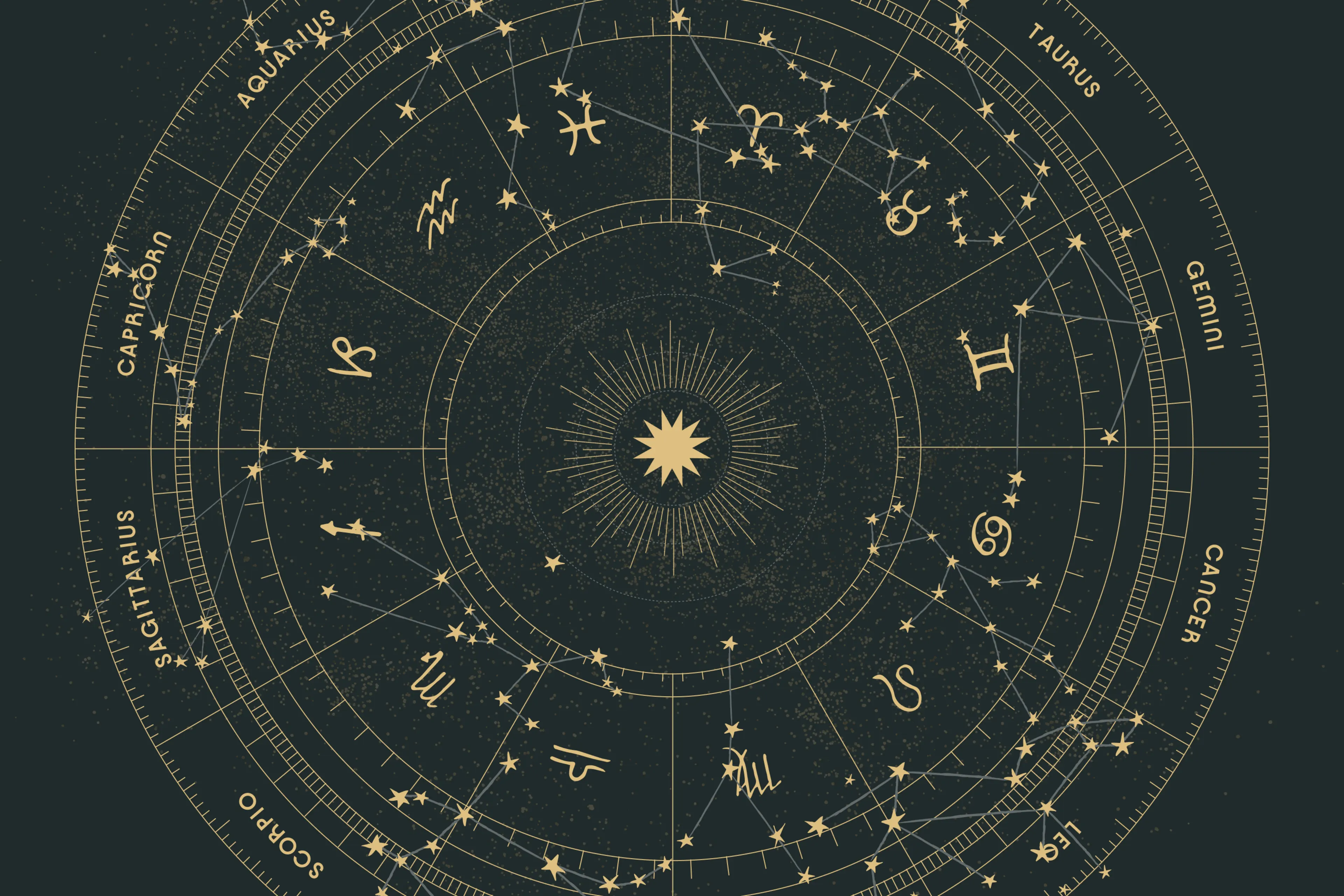
A comprehensive guide to understanding astrology birth charts, exploring the zodiac and Houses wheels, planetary placements, and their significance. Learn how celestial energies shape your personality, life patterns, and potential.
Astrology revolves around understanding the unique celestial blueprint of each individual, captured in a birth chart, also known as a natal chart. In this lesson, we explore the components of the astrology birth chart wheel, shedding light on its structure and significance. By the end of this article, you’ll have a clearer understanding of how this map of the heavens works, acting as a guide to understanding your personality, life patterns, and potential.
Read It Loud
The Structure of a Birth Chart
The astrology birth chart begins with two fundamental circles, each divided into 12 equal slices. These circles represent the zodiac wheel and the Houses wheel, each playing a distinct role in your chart.
- The Zodiac Wheel
The zodiac wheel represents the 12 signs of the zodiac, each occupying a 30° section of the circle, making up the full 360° of the heavens. In the center of this wheel lies Earth, symbolizing the observer’s perspective. This wheel maps the apparent movement of the Sun, Moon, and planets as seen from Earth. The Sun appears to travel through each of the 12 zodiac signs, spending approximately one month in each. From our vantage point, the zodiac wheel acts as a cosmic clock, showing the positions of celestial bodies at any given moment. These positions are crucial in astrology, as they define the energies influencing us. - The Houses Wheel
The Houses wheel represents the various areas of life. Just like the zodiac wheel, it is divided into 12 sections, each representing different aspects of human experience, such as relationships, career, and health. The placement of these Houses is determined by the ecliptic, the Sun’s apparent path around Earth. The point on the ecliptic that was rising on the eastern horizon at the exact time of your birth marks the starting point of the 1st House, also known as the Ascendant. This is why an accurate birth time is essential for creating a precise chart.

Combining the Wheels: A 3D Perspective
To create a complete birth chart, the zodiac wheel is layered over the Houses wheel. This arrangement positions the planets in the chart according to their actual astronomical locations at the time of birth. The resulting chart gives a dynamic picture of how celestial energies interact with the different areas of life.
In the chart:
- The outer edge shows the zodiac signs.
- The slices represent the 12 Houses.
- The planets are placed within the zodiac wheel at their respective positions, denoting their influence in specific life areas.
Decoding the Chart: Key Features
- House Divisions vs. Zodiac Signs
One important observation is that the divisions of the zodiac signs do not always align perfectly with the House divisions. This misalignment occurs because the positioning of the two wheels depends on the specific time and location of birth. While the zodiac wheel rotates to match the planetary positions, the Houses wheel remains fixed with the 1st House always starting on the left side of the chart. This fixed structure anchors the interpretation of the chart. - House Cusps and Their Special Names
Each House begins at a dividing line called the cusp, which denotes the boundary between two Houses. Among the House cusps, four have special names due to their significance:- Ascendant (1st House cusp): The sign on the eastern horizon at the time of birth, representing your outward personality and approach to life.
- I.C. (Imum Coeli, 4th House cusp): Symbolizes your roots, home, and family.
- Descendant (7th House cusp): Indicates partnerships and relationships.
- M.C. (Medium Coeli or Midheaven, 10th House cusp): Represents your career, reputation, and life goals.

Interpreting Planetary Positions
Each planet’s placement in the chart is marked by a glyph, along with the degree of its position in a zodiac sign. These degrees are derived from an ephemeris, an astronomical almanac detailing the celestial positions at any given time.
The interaction of planets with the Houses and signs reveals a wealth of information:
- Planets: Represent energies or functions (e.g., the Moon governs emotions, while Mercury rules communication).
- Signs: Modify how planetary energies manifest (e.g., Venus in Aries expresses love boldly, while Venus in Pisces does so compassionately).
- Houses: Indicate where in life these energies are focused (e.g., the 5th House highlights creativity and romance, while the 10th House focuses on career and public image).
The Importance of Aspects
In the chart, lines connecting planets within the inner circle represent aspects—the angles formed between planets. These aspects indicate how planetary energies interact, whether harmoniously or with tension. Aspects will be explored in greater depth in a later lesson.
Why Birth Time Matters
The interplay of the zodiac and Houses wheels relies heavily on your exact birth time and location. Even a slight inaccuracy can shift the entire chart, leading to a misrepresentation of the planetary influences. This is why astrologers emphasize precision when casting a natal chart.
A Sample Chart in Action
To illustrate, consider a sample chart:
- The Sun is in Leo, making this person a Leo by Sun sign.
- The Moon is in Taurus, adding a grounded emotional nature.
- The Ascendant is in Virgo, meaning this individual projects a meticulous, analytical demeanor.
This combination shows why knowing only your Sun sign provides a limited view. Each natal chart includes all 12 zodiac signs, and their placement on the House cusps reveals your attitudes and experiences in various life domains. Additionally, planets in specific Houses further refine the interpretation.
The Birth Chart: A Celestial Blueprint
In essence, your natal chart is a snapshot of the heavens at the moment of your birth, viewed from your birth coordinates. It’s a cosmic map, blending the energies of planets, signs, and Houses to provide insights into your personality, life path, and potential challenges.
Astrology, once reliant on mathematical calculations performed by hand, has become more accessible with modern tools. Today, astrologers use computer-generated charts, freeing them to focus on interpreting the wealth of information a chart holds.
Final Thoughts
The birth chart is a rich tapestry of interconnected energies that make up your unique astrological signature. By understanding the basic layout of the chart—its zodiac and House wheels, cusps, and planetary placements—you begin to unlock the wisdom of astrology. In future lessons, we’ll delve deeper into aspects, planetary rulers, and the meanings of specific Houses, helping you become fluent in the language of the stars.
aadhyatma, vastu-tips/" class="vn-autolink">Vastu Tips, VastuGuruji, अध्यात्म, understanding, birth, chart, layout, astrology, lesson — संक्षेप और और पढ़ें
aadhyatma, Vastu Tips, VastuGuruji, अध्यात्म, understanding, birth, chart, layout, astrology, lesson के बारे में और जानकारी के लिए नीचे दी गई संबंधित खबरें पढ़ें। विरात महानगर पर aadhyatma, Vastu Tips, VastuGuruji, अध्यात्म, understanding, birth, chart, layout, astrology, lesson से जुड़ी अद्यतन रिपोर्टिंग पढ़ें।
संबंधित खबरें:
- घर की इस दिशा में करवाएं हरा रंग, बेटे के जीवन में नहीं आएगी कोई परेशानी
- इस दिशा में बनवाएं खिड़की, खुल जाएगी तकदीर, भगवान कुबेर की बरसेगी कृपा
- अपने सिग्नेचर की स्टाईल चेंज करते ही बन जाएंगे मालामाल, आज से ही अपना लें ये सरल वास्तु टिप्स
स्रोत / और पढ़ें: भारत सरकार पोर्टल
आपकी राय जरूरी है
इस खबर पर अपनी प्रतिक्रिया WhatsApp / Telegram पर भेजें — हम पढ़ते हैं, जवाब देते हैं, और बेहतर खबरें लाते हैं।
अन्य श्रेणियों से ताज़ा
रायपुर में 28 सितंबर को निकलेगी गणेश विसर्जन झांकी: शाम 7 बजे से इन मार्गों पर रहेगा प्रतिबंध, घर से निकलने से पहले देखें ट्रैफिक एडवाइजरी, पढ़ें पूरी जानकारी

एसबीआई और पीएनबी ग्राहकों के लिए जरूरी खबर हड़ताल के कारण 25 सितंबर तक पूरे कर लें बैंक के काम

दतिया के डायल 112 हीरोज